- The Job
- Posts
- Shipbuilding Workforce
Shipbuilding Workforce
A short-term training center looks beyond the city limits to help people break into a high-demand industry.

Paul Fain
April 16, 2026
A manufacturing center in Virginia taps public-private partnerships to train workers for shipyard jobs across the state. Also, a pioneer of apprenticeship degrees in the U.S. moves into healthcare; an essay arguing that computer science is evolving, not declining amid AI; and a new reporting fellowship. (Subscribe here.)

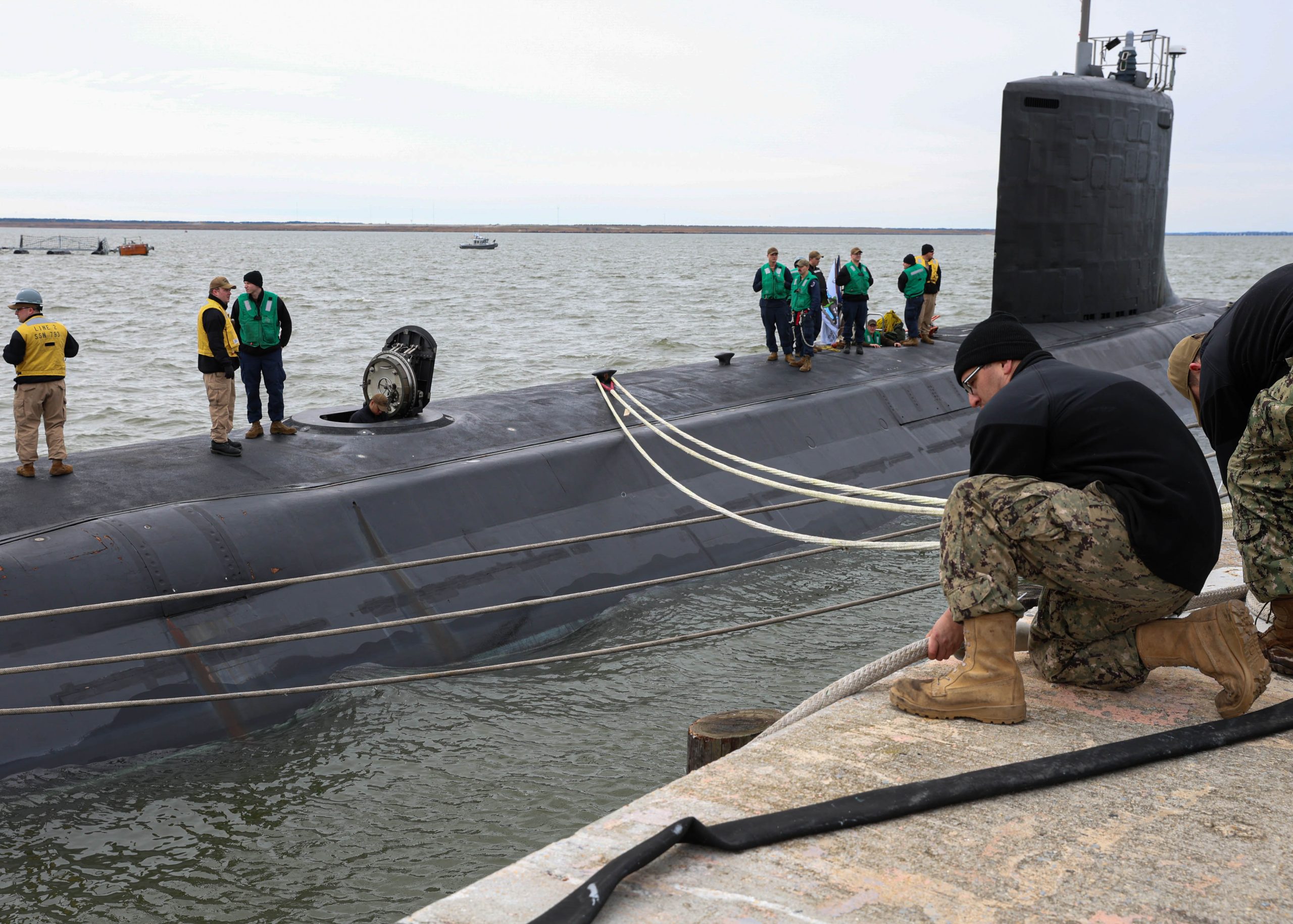
The USS Louisiana in Apra Harbor, Guam. (Photo by Andrew McPeek, Courtesy of U.S. Navy)
Going Where the Jobs Are
Workforce development is the biggest challenge for U.S. shipbuilding, which will need 250K additional workers within a decade. The U.S. government is pouring money into the industry, including at least $7.7B over six years to develop and retain the shipbuilding workforce.
A manufacturing center in Virginia is getting creative about tapping into this demand, to boost both opportunities for local workers and economic development. And while the center in Danville can build on a strong local manufacturing history, it’s also located 250 miles away from the state’s shipyards around Hampton Roads.
“We’ve leaned in hard on what we’re good at—working with our hands,” Jason Wells, executive vice president of manufacturing advancement at the Institute for Advanced Learning and Research campus in Danville, tells Stephenie Overman, a veteran Virginia-based reporter.
Overman reports for Work Shift that 1,350 people have graduated from the institute’s Accelerated Training and Defense Manufacturing program, which launched five years ago and recently added a 100K-square-foot training facility. Many of those graduates have gotten jobs in Hampton Roads.
The training program relies on public-private partnerships like the BlueForge Alliance, a nonprofit that gets serious money from the U.S. Navy and plays a coordinating role with education and training programs.
Likewise, companies and federal researchers around the country are teaming up with the manufacturing program, reports Overman. They include BAE, Northrop Grumman, Oak Ridge National Laboratory, Puget Sound Naval Shipyard, and the Trident Refit facility located in Bangor, Wash.
Click over to Work Shift to read Overman’s full coverage.

Growing Apprenticeship Degrees in Healthcare
Reach University has been a pioneer of apprenticeship degrees in the United States—an increasingly popular approach that allows apprentices to simultaneously earn credit for paid job experience and college classes. The nonprofit university has focused heavily on teachers, training about 3,800 since 2020.
Now, Reach is expanding into healthcare. This month, it launched the nation’s first Apprenticeship College of Health in Washington State, alongside the Healthcare Training Fund, a nonprofit partnership between hospitals, healthcare systems, and the state’s largest healthcare union.
The effort is starting with behavioral health, but the university has its sights set on nursing and other health fields as well.
Joe Ross, president of Reach, says the expansion was a natural fit. Like in teaching, many high-demand occupations in healthcare require a degree, which can be a barrier to entry for paraprofessionals and other workers in lower-paid positions looking to move up. But upskilling those workers is crucial as health systems across the country struggle with rising demand for care and, in some cases, severe shortages of workers.
“These are the jobs that are available to people that make a difference, not just for one’s own livelihood, but also their community,” Ross says.
The Details: The first cohort, about 25 students, will earn Reach University’s associate of arts in liberal studies, the same degree offered in the teacher pathway but with a focus on social science. The apprenticeship and degree will qualify them for jobs as substance use disorder professionals, an occupation in high demand in Washington.
The eventual goal is for the associate degree to stack into bachelor’s and master’s degree programs, subject to accreditor and state approval. And learners should be able to complete the whole sequence in five years.
“The intent is for it to be an accelerated pathway because it’s year-round,” Ross says.
While Reach provides the education, the Healthcare Training Fund addresses a perennial challenge in creating new apprenticeships: employer buy-in. Getting employers on board can be particularly difficult in behavioral health, because many providers are stretched to capacity and operating with limited budgets.
The training fund has a track record it can lean on, says executive director Laura Hopkins. The fund has sponsored apprenticeships in physical healthcare for years and began expanding into behavioral health during the COVID pandemic. Funding from the Washington-based Ballmer Group has offset some of the cost for employers.
More than 50 employers have participated in the healthcare apprenticeships the fund already offers, and Hopkins says all but one have continued.
Looking Ahead: Reach expects to train at least 1K people in behavioral health apprenticeships over the next five years. And to meet that goal, it will need to expand beyond Washington.
“There are lots of teachers’ colleges across the country,” Ross says. “We hope there will be many apprenticeship colleges of health, too.”
Read the full story over at Work Shift. —By Colleen Connolly

— From The Editors —
The Future of Work Reporting Fellowship will support journalists telling stories that explore how government and private investments are reshaping economic opportunity. To learn more, join us in a webinar on April 23.
Open Tabs
AI and Jobs
Google has rolled out its AI & Economy Research Program, which supports collaborations between top economists and researchers. The research will focus on how AI is transforming the future of work, productivity, and growth, and on AI adoption across sectors and economies. “Fully realizing AI’s economic potential will require a new era of partnership between companies, workers, governments, researchers, and more,” the company said.
Khan TED Institute
ETS, Khan Academy, and TED plan to launch a new institute aimed at reimagining higher education for the AI era. The Khan TED Institute will seek to “prepare learners for the next generation of jobs” while also cultivating human skills. It will be competency-based and degree-issuing, with a total price of less than $10K for a degree. Corporate partners such as Microsoft, McKinsey, and Replit contributed to the institute’s design.
Accreditation Rules
The U.S. Department of Education has proposed new rules for higher ed accreditation that would make it easier for upstart accreditors to enter the market, require more explicit standards for student outcomes, and give the federal government more control over campus policies. The draft rules call out short-term programs for new protections, but on the whole, the administration’s summary rationale focuses more on “viewpoint diversity” and anti-DEI than it does workforce concerns.
AI and Manufacturing
Google.org announced $10M in backing for a Manufacturing Institute project to train workers for the industry. The funding will support AI skills training and apprenticeship projects in 15 U.S. regions, with a goal to prepare 40K current and future employees. The project includes new courses from the institute and more training and scholarships through new Federation for Advanced Manufacturing Education chapters.
Sustainable Funding
Outcomes-based financing can offer flexible cash that acts as a “tuition-plus” loan, where learners repay the loan only after they achieve a specific income threshold, Chelsea Miller, associate director of UpSkill America from the Aspen Institute, writes in a new brief. Smaller businesses are well suited to benefit from this form of financing, she writes. And intermediary organizations can lower the bar to entry for these businesses.
Thanks for reading. If this newsletter was forwarded to you, subscribe here. —PF